VibeFont
Draw 24 glyphs, get a 55-glyph installable TTF. Segments a hand-drawn sample sheet, traces outlines to vectors, derives the letters the sheet does not cover, compiles with fonttools.
| Stars | Language | Updated | License |
|---|---|---|---|
| 0 | Python | 2026-10-09 | MIT |
- Topics: fonts, fonttools, glyphs, ttf, typography, vectorization
Computer, make font.
A pipeline for making fonts with AI: draw a sample sheet, and it segments the rows, traces every glyph to vector outlines, derives the letters the sample doesn't cover from traced parts, and compiles an installable TTF with fonttools, plus proof and comparison renders to judge the result by.
Sample
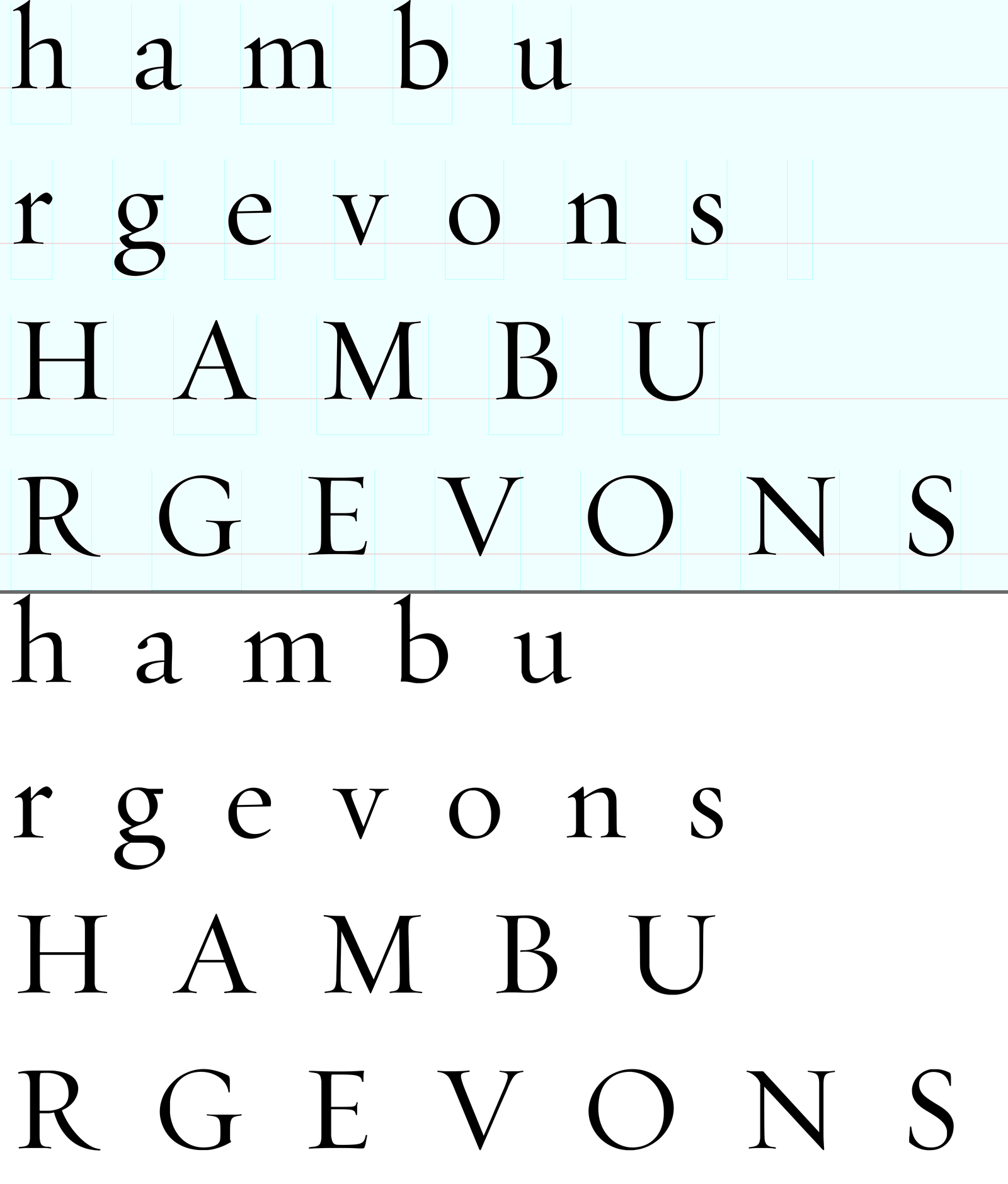
24 drawn glyphs in, 55 glyphs out. The four hamburgevons rows below carry
every structural part of the alphabet; the other 31 characters (c d f i j k l
p q t w x y z, their capitals, and .,-) are assembled from traced pieces:
stems from h/n, bowls from o/b, diagonals from v/V, arms from r/E.
Source sheet above, the built font re-rendering it below:
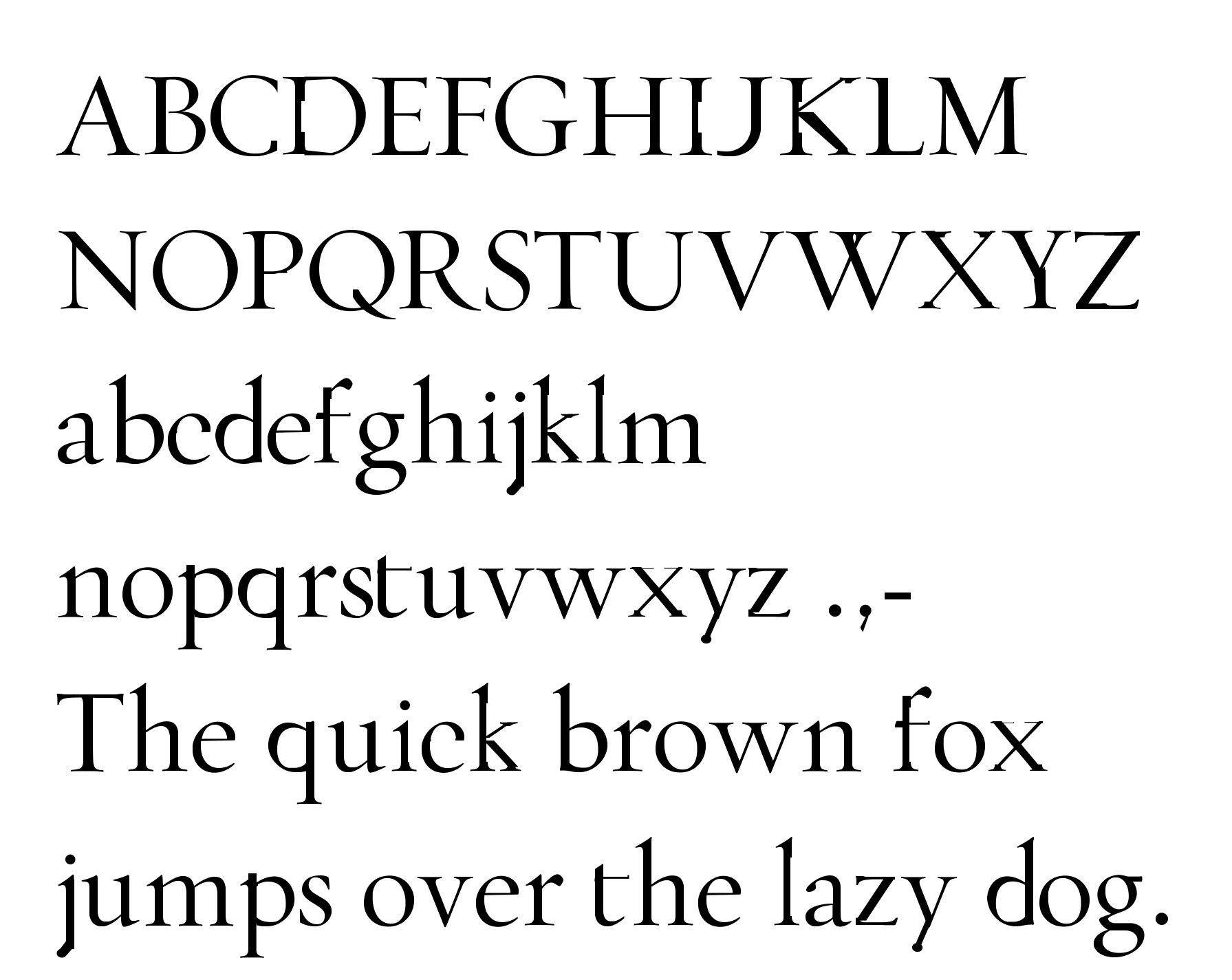
The full character set, typed with the font's own metrics:
The font itself: assets/samples/VibeSerif-Regular.ttf.
Download and double-click to install.
Quick start
Requires uv (which fetches Python ≥ 3.12 itself).
git clone https://github.com/4esv/VibeFont.git && cd VibeFont
uv sync
uv run pytest   # toolchain + end-to-end pipeline tests
uv run vibefont assets/input/font-sample.png \
  --line hambu --line rgevons --line HAMBU --line RGEVONS
Outputs land in assets/output/: the TTF, a proof sheet, and a side-by-side
comparison against the source image.
Your own font
Draw a sample sheet that follows four rules:
- Ink is near-black (every RGB channel < 128). Guides (baselines, grids, zone strips) are light or colored, so they never read as ink.
- Rows are separated by clear horizontal gaps; descenders must not touch the next row.
- Glyphs within a row are separated by clear vertical gaps; no touching letters.
- A colored baseline guide under each row is used if present; otherwise the median glyph bottom is.
Then run it, one --line per row, text exactly as drawn:
uv run vibefont my-sample.png --line hambu --line rgevons \
  --line HAMBU --line RGEVONS --family "My Serif"
More letters on the sheet means fewer derived ones. Letters the sheet doesn't
cover come from recipes in src/vibefont/recipes.py:
per-letter assembly instructions tuned against proof renders. They are
design decisions, not derivations, and they are where the iteration happens.
Making fonts with AI
This repo ships two Claude Code skills, so the intended workflow is conversational:
cd VibeFont && claude
> make a font from ~/Desktop/my-sample.png – rows are "hambu", "rgevons", ...
> the derived k looks too wide and its arm misses the stem – fix it- make-font: runs the pipeline, reads the proof/comparison renders, reports traced vs derived, diagnoses segmentation failures.
- glyph-recipes: writes and tunes derivation recipes: the parts toolkit, the coordinate system, and the craft rules (cut serif slabs shallow, never rotate serifed strokes, overlap joins generously...).
Everything in this repo (pipeline, recipes, the sample font above) was built that way.
How it works
image ──► segment (rows, glyph boxes, baselines)
              ├──► trace (potrace: bitmap → cubic contours, px → font units)
              └──► derive (cut parts, compose missing letters, retrace)
                       ▼
          build (fonttools: cu2qu, metrics, name records, overlap removal) ──► TTF
                       ▼
render (proof, recreation, comparison sheets)| module | role |
|---|---|
segment.py |
ink mask, row bands, per-glyph boxes, baseline detection |
trace.py |
potrace each glyph crop into baseline-anchored outlines |
derive.py |
bitmap parts toolkit: cut, flip, scale, 3-slice stretch, paste |
recipes.py |
per-letter assembly instructions for the 31 derived glyphs |
build.py |
FontBuilder: glyf, metrics, OS/2, full name-record set, gasp |
render.py |
proof sheet, sample recreation, side-by-side comparison |
Derived glyphs are composed as bitmaps and retraced like drawn ones, so paste seams merge into clean outlines. The TTF carries the full name-record set, code-page bits, and fsSelection flags that macOS Font Book validation requires. It installs cleanly.
Layout
src/vibefont/     package + CLI
tests/            toolchain smoke tests + end-to-end pipeline test
assets/input/     source sample sheets
assets/output/    build target (gitignored)
assets/samples/   tracked results: TTF, proof, comparison
.claude/skills/   Claude Code skills: make-font, glyph-recipes
Toolchain
| dep | role |
|---|---|
| fonttools | font compilation, pens, cu2qu, name tables |
| skia-pathops | overlap removal / path booleans |
| potracer | bitmap → vector tracing (pure Python) |
| Pillow | image loading + rendering |
| numpy | bitmap buffers between Pillow and potrace |
MIT licensed.